
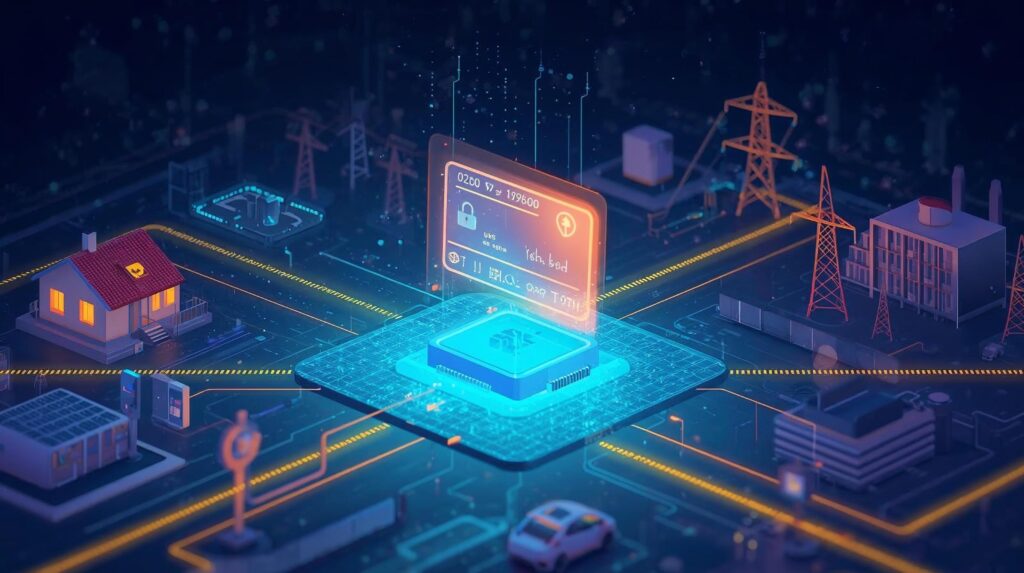
Verifiable Credentials in P2P networks are revolutionizing how we establish trust online, moving away from centralized gatekeepers to a more user-centric, secure model. Imagine a world where you control your own digital identity, where you can prove who you are or what you’ve done without relying on a single company to vouch for you.
As the energy sector evolves toward decentralized systems, new digital infrastructure is required to enable secure, automated, and trusted interactions between energy participants. Peer-to-peer electricity trading, distributed solar generation, electric vehicles, and smart grids introduce millions of new actors and assets into the energy ecosystem. For these systems to function efficiently, every participant—whether a consumer, prosumer, device, or organization—must be digitally identifiable and verifiable.
This is where Verifiable Credentials (VCs) come into play.
Within the Digital Energy Grid (DEG) and the emerging India Energy Stack (IES) architecture, Verifiable Credentials form the trust layer that enables decentralized energy transactions. These credentials allow systems to automatically verify the identity, permissions, and eligibility of participants before enabling energy trades or services.
In this article, we explore what Verifiable Credentials are, how they work, and why they are essential for the next generation of digital energy infrastructure.
The Trust Deficit in Traditional P2P Networks
Traditionally, electricity markets were centralized. A few large utilities controlled generation, distribution, and billing. However, the modern energy landscape is changing rapidly:
- Millions of rooftop solar systems
- Electric vehicle charging networks
- Battery storage systems
- Peer-to-peer energy trading platforms
- Distributed energy resources (DERs)
These distributed systems introduce a key challenge: How do you verify that every participant in the system is legitimate?
Peer-to-peer networks have always held immense potential for direct interaction and resource sharing. However, they’ve consistently grappled with a fundamental problem: trust. How do you trust someone you don’t know in a decentralized environment? For example:
- Is a rooftop solar installation actually certified?
- Does a consumer have permission to trade electricity?
- Is an EV charger authorized to operate on the grid?
- Does a prosumer meet regulatory requirements to sell energy?
Without a digital trust layer, these verifications require manual approvals and centralized databases. Verifiable Credentials solve this problem.
Why Centralized Authorities Create Bottlenecks
Traditional P2P systems often try to solve this by introducing centralized services for identity verification or reputation management. Think of online marketplaces or ride-sharing apps. While they facilitate connections, they also act as intermediaries, holding vast amounts of user data and charging fees. These centralized entities become single points of failure, vulnerable to hacks and censorship, and can dictate terms to their users.
The Challenge of Reliable P2P Identity Verification
Without a central authority, verifying identities in P2P interactions becomes a significant hurdle. Is the seller on a P2P marketplace really who they say they are? Does the person offering a service truly have the stated qualifications? The lack of reliable P2P identity verification can lead to scams, fraud, and a general reluctance to engage in truly decentralized exchanges. This is where Verifiable Credentials in P2P step in, offering a robust solution.
What are Verifiable Credentials? A Primer
Verifiable Credentials are tamper-proof, cryptographic proofs of identity, qualifications, or facts. They are a W3C standard, designed to provide a secure and privacy-preserving way to exchange verified information digitally. Think of them as a digital equivalent of your passport, driver’s license, or university degree, but with far greater control for the individual.
The Core Triangle: Issuer, Holder, and Verifier
At the heart of VCs is a simple, yet powerful, three-party model:
- Issuer: An entity that attests to information about a subject and creates a VC. For example, distribution companies (DISCOMs), electricity regulators, solar certification agencies, grid operators, government bodies
- Holder: The individual or entity who possesses the VC. You are the holder of your digital degree or passport. You decide who to share it with. Holders can include: solar prosumers, consumers, EV charging stations, energy aggregators, EV car owners.
- Verifier: An entity that receives a VC from a holder and cryptographically checks its authenticity and validity with the issuer. In a P2P context, another peer acts as a verifier. Examples include: Energy trading platforms, Market operators, Utilities, Grid management systems. When a credential is presented, the verifier can instantly confirm:
- The credential was issued by a trusted authority
- The credential has not been tampered with
- The credential has not expired or been revoked
How are Verifiable Credentials different from Physical Credentials
Verifiable Credentials are cryptographically secure digital certificates that prove claims about an entity or asset. They function similarly to physical credentials like:
- Driver licenses
- Identity cards
- Certificates
- Licenses
But instead of paper documents, they are digitally signed, machine-readable credentials that can be verified instantly by software systems. A verifiable credential typically proves information such as:
- Identity of an energy participant
- Certification of a renewable energy asset
- Regulatory compliance
- Grid connection authorization
- Consumer consent
- Energy generation claims
In the India Energy Stack framework, these credentials are used to establish trust across digital energy marketplaces and energy infrastructure systems. Credentials are essentially verifiable digital proofs that establish the eligibility, authority, or status of actors and assets within the energy ecosystem.
How VCs Differ from Traditional Digital Certificates
Unlike traditional digital certificates (like SSL certificates), VCs are designed for Self-Sovereign Identity (SSI). This means the individual (the holder) has control over their credentials, storing them securely in a digital wallet and selectively presenting them. Traditional certificates often bind an identity to a specific domain or service, without the same level of user control. VCs, therefore, offer a much more flexible and privacy-respecting way to manage digital credentials P2P. You can learn more about the technical specifications of VCs from the W3C Verifiable Credentials Data Model.
How to Integrate Verifiable Credentials in P2P Architectures
Integrating Verifiable Credentials in P2P systems is a game-changer for building trust without intermediaries. It leverages decentralized technologies to ensure authenticity and privacy.
The Foundational Role of Decentralized Identifiers (DIDs)
Before VCs can be exchanged, identities need a decentralized anchor. This is where Decentralized Identifiers (DIDs) come in. DIDs are persistent, globally unique identifiers that do not require a centralized registration authority. They are owned and controlled by the individual, making them a cornerstone of SSI. Each issuer, holder, and verifier in a P2P network will typically have their own DID, which acts as a public key for cryptographic operations, linking to a DID document that contains public keys and service endpoints.
A Step-by-Step Flow: From Issuance to P2P Verification
The process of using VCs in P2P typically follows these steps:
- Issuance: An authoritative issuer (e.g., a professional body, a government agency) issues a VC to a holder, digitally signing it using their DID.
- Storage: The holder receives and securely stores the VC in their digital wallet.
- Presentation Request: A verifier (another peer in the P2P network) requests specific proof from the holder. For example, “Are you over 18?” or “Do you have a valid driver’s license?”
- Presentation: The holder selectively presents a VC (or a partial proof derived from it) to the verifier, cryptographically signing the presentation.
- Verification: The verifier receives the presentation, checks the issuer’s signature, and verifies the credential’s validity using the issuer’s public DID document. This ensures the credential hasn’t been revoked or tampered with.
How Verifiable Credentials Work in India Energy Stack
Let’s look at a simple example involving a solar prosumer selling energy in a P2P market.
Step 1 — Credential Issuance
A DISCOM verifies that a rooftop solar system:
- Is grid connected
- Meets regulatory requirements
- Has certified equipment
The DISCOM then issues a Solar Asset Credential.
Step 2 — Credential Storage
The prosumer stores the credential in a digital wallet or energy identity registry.
Step 3 — Credential Presentation
When the prosumer wants to sell electricity on a trading platform like YoGrid:
- The platform requests verification
- The prosumer presents the credential
Step 4 — Credential Verification
The platform verifies:
- Issuer signature
- Validity
- Regulatory compliance
If valid, the system allows the prosumer to participate in the energy market.
Structure of a Verifiable Credential
Verifiable Credentials are typically stored as machine-readable JSON documents.
A simplified structure includes:
- Credential ID
- Issuer
- Issue date
- Expiry date
- Subject (who the credential belongs to)
- Claims (information being certified)
- Cryptographic signature
Example structure:
{
  "type": "VerifiableCredential",
  "issuer": "Regulator Authority",
  "credentialSubject": {
      "assetType": "RooftopSolar",
      "capacity": "5kW",
      "location": "Delhi"
  },
  "issuanceDate": "2026-01-01",
  "proof": {
      "type": "DigitalSignature"
  }
}
Types of Verifiable Energy Credentials in India Energy Stack
India Energy Stack aims to build a Digital Public Infrastructure (DPI) for the power sector, enabling interoperable services across utilities, consumers, and energy platforms. Within this architecture, Verifiable Energy Credentials act as the trust infrastructure. The India Energy Stack currently enables following Energy Credentials.
Available Credentials
| Credential | Description | Purpose |
|---|---|---|
| Utility Customer Credential | Barebones identity credential | Privacy-preserving customer identification |
| Consumption Profile Credential | Connection and load characteristics | Load management, tariff determination |
| Generation Profile Credential | DER generation capability | Grid management, net metering, renewable tracking |
| Storage Profile Credential | Battery/energy storage capability | Virtual power plants, demand response |
| Program Enrollment Credential | Energy program participation | Demand response, ToU programs |
Key Benefits of Using VCs for Peer-to-Peer Trust
The adoption of Verifiable Credentials in P2P offers a suite of compelling advantages that address many of the inherent challenges in decentralized systems.
Additionally, Enhancing Security and Preventing Fraud
VCs are cryptographically secure, making them extremely difficult to forge or tamper with. Each credential is digitally signed by the issuer, and its authenticity can be verified independently by any peer. This drastically reduces the risk of identity fraud and misrepresentation in P2P interactions, creating a safer environment for users.
Empowering Users with Self-Sovereign Identity (SSI)
A core principle of VCs is giving individuals full control over their own data and identity. With Self-Sovereign Identity (SSI), users decide which credentials to share, with whom, and when. They don’t have to surrender their personal information to a central database. This privacy-by-design approach is crucial for building trust in P2P systems, as it respects user autonomy and minimizes data exposure.
Therefore, Improving Scalability and Reducing Reliance on Third Parties
By shifting the burden of identity verification from a central authority to the individual and cryptographic proofs, P2P networks can scale more efficiently. There’s no single bottleneck for processing identity requests. This reduction in reliance on intermediaries not only lowers operational costs but also fosters true decentralization, making P2P ecosystems more robust and resilient.
Current Challenges and the Future Outlook
While Verifiable Credentials in P2P hold immense promise, their widespread adoption still faces certain hurdles.
However, Overcoming Implementation and Interoperability Hurdles
Developing applications that effectively integrate VCs requires specialized knowledge in cryptography, decentralized identifiers, and secure storage. Additionally, ensuring interoperability between different VC wallets, issuers, and verifiers remains a key challenge. Various standards bodies and open-source projects are actively working to streamline these processes and create a seamless ecosystem for W3C Verifiable Credentials.
The Future of P2P Systems with Verifiable Data
Despite the challenges, the trajectory for VCs in P2P is overwhelmingly positive. We can anticipate VCs becoming standard for everything from online gaming to professional networking, creating a truly global and trustworthy digital commons. Imagine a future where your academic transcripts, professional certifications, and even your health records are all secure, verifiable, and controlled by you, ready to be selectively shared in any P2P interaction.
Getting Started with Verifiable Credentials in Your P2P Application
Implementing Verifiable Credentials in P2P can seem daunting, but numerous open-source tools, SDKs, and communities are emerging to support developers. Start by exploring existing DID methods and VC libraries. Experiment with issuing and verifying simple credentials in a test environment. The journey towards truly decentralized trust is a collaborative one, and your contribution can help shape the future of P2P interactions.
Frequently Asked Questions
What’s the main difference between Verifiable Credentials and a traditional login system?
Traditional login systems rely on a central server to store and verify your identity, often using a username and password. Verifiable Credentials, however, allow you to hold cryptographic proofs of your identity or attributes in your own digital wallet. You present these proofs directly to a verifier in a P2P interaction, without a central authority intermediating. This provides greater privacy and control over your data.
Can Verifiable Credentials be revoked?
Yes, Verifiable Credentials can be revoked by the issuer. The method of revocation can vary, but generally, issuers maintain a revocation list or a mechanism to signal that a credential is no longer valid. Verifiers are expected to check the revocation status when verifying a credential, ensuring that only currently valid VCs are accepted.
Are Verifiable Credentials the same as blockchain?
No, Verifiable Credentials are not the same as blockchain, but they often use blockchain technology as an underlying infrastructure. VCs are a data model and a set of cryptographic proofs. Blockchain can provide the decentralized ledger for DIDs and for tracking revocation status, ensuring a tamper-proof and robust base for the trust anchor needed for Verifiable Credentials in P2P systems.
How is Privacy maintained in Verifiable Credentials ?
The modular design allows for selective disclosure:
- Utility Customer Credential uses a masked consumer number to protect the full account number
- Consumption Profile can be shared for load management without revealing identity
- Generation/Storage Profiles enable participation in energy programs without exposing personal details